
Page Title
| Navigation Bar Placeholder |
Page Title
| Navigation Bar Placeholder |
The "Apollo of Dog" can be traced back to ancient
times. Ancestors to the modern Great Dane date
back to the ancient civilizations of Assyrians, Egypt,
ancient Greece and Rome. The original dogs were
called "Bullenbeisser" and were similar in type to
the Mastiff. The modern Mastiff was developed in
England but the Bullenbeisser was of Germanic
origins and is the basic dog from which the
Mastiff-type dogs have emerged. Bullenbeissers
were massive and courageous dogs used as war
and guard dogs or as hunting dogs who used their
strength and agility to bring down wild boar. The
development of the modern pure-bred Great Dane
began in the middle of the 19th century as breeders
worked to turn the highly aggressive dog into a
gentle giant. Great Danes have developed into loyal
and devoted companions.
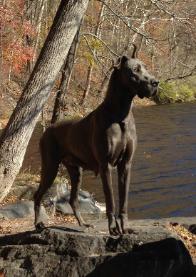
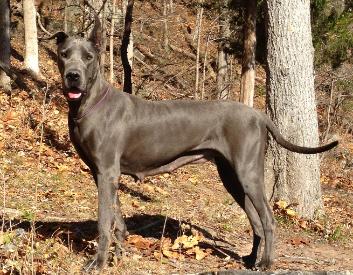
Though regal in appearance, combing strength and
dignity, the size of the Great Dane should not be
taken lightly. The females should not be less than
28 inches at the shoulders and the male not less
than 30 inches. Bigger is generally better in the
show ring so breeders are producing bigger and
bigger Danes. The appropriate weight of a Dane
depends on its size and sex with males being more
massive throughout and of heavier bone than the
females. That being said, a healthy Great Dane will
weigh between 100 and 180 pounds.
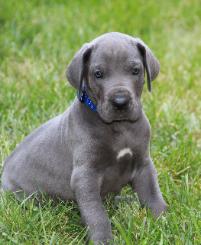
Great Dane puppies, like all puppies, require a lot of
attention and financial responsibility on the part of
their owner. Well-socialized dogs begin with the
owner taking the time to introduce their new puppy
to a variety of things early in their development and
by teaching them their place in the pack, i.e. your
family. Dane puppies grow fast and in one years
time, a Dane puppy is likely to be over a 100
pounds. Good manners need to be reinforced early
while the puppy is small and easy to manage. Like
all puppies, your Dane puppy will be placed on an
immunization schedule for the first few months and
require annual booster shots in the coming years.
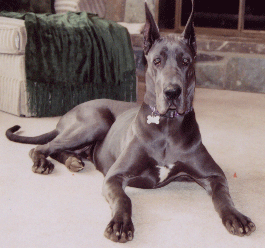
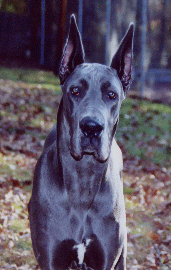
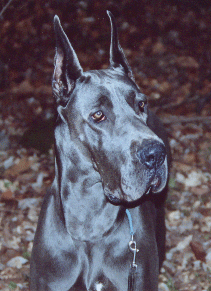
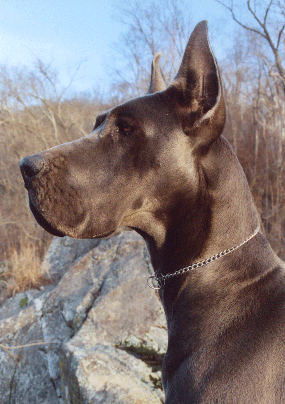
Whether to have the ears cropped is a personal
preference but if you choose to have the ears
cropped then be prepared to post the ears for
several months until the ears stay up on their own.
times. Ancestors to the modern Great Dane date
back to the ancient civilizations of Assyrians, Egypt,
ancient Greece and Rome. The original dogs were
called "Bullenbeisser" and were similar in type to
the Mastiff. The modern Mastiff was developed in
England but the Bullenbeisser was of Germanic
origins and is the basic dog from which the
Mastiff-type dogs have emerged. Bullenbeissers
were massive and courageous dogs used as war
and guard dogs or as hunting dogs who used their
strength and agility to bring down wild boar. The
development of the modern pure-bred Great Dane
began in the middle of the 19th century as breeders
worked to turn the highly aggressive dog into a
gentle giant. Great Danes have developed into loyal
and devoted companions.
Though regal in appearance, combing strength and
dignity, the size of the Great Dane should not be
taken lightly. The females should not be less than
28 inches at the shoulders and the male not less
than 30 inches. Bigger is generally better in the
show ring so breeders are producing bigger and
bigger Danes. The appropriate weight of a Dane
depends on its size and sex with males being more
massive throughout and of heavier bone than the
females. That being said, a healthy Great Dane will
weigh between 100 and 180 pounds.
Great Dane puppies, like all puppies, require a lot of
attention and financial responsibility on the part of
their owner. Well-socialized dogs begin with the
owner taking the time to introduce their new puppy
to a variety of things early in their development and
by teaching them their place in the pack, i.e. your
family. Dane puppies grow fast and in one years
time, a Dane puppy is likely to be over a 100
pounds. Good manners need to be reinforced early
while the puppy is small and easy to manage. Like
all puppies, your Dane puppy will be placed on an
immunization schedule for the first few months and
require annual booster shots in the coming years.
Whether to have the ears cropped is a personal
preference but if you choose to have the ears
cropped then be prepared to post the ears for
several months until the ears stay up on their own.
| Potomac Run |
 |
| |
 |
| |
 |
| |
 |
| |
 |
| |
 |
| |
 |
| |
 |
| Great Danes |
| To Contact Us : potomacrunpups @gmail.com 301-983-2145 |